

VDM runs on Windows 10 and Windows 11 (x64, ARM64 and 32-bit), and on 64-bit Linux (x86-64 and ARM64): see On Linux. Builds for macOS are new and still experimental: see On a Mac.
Escolher uma transferência
Todas as versões estão na página Lançamentos. Para Windows, existem três ficheiros:
| Ficheiro | O que é |
|---|---|
VoltDownloadManager-<version>-setup.exe |
The installer. Pick this one unless you have a reason not to. It can set up browser integration and open .torrent files and magnet links with VDM. |
VoltDownloadManager-<version>-portable.zip |
Uma cópia portátil. A lista de transferências e as definições permanecem numa pasta data ao lado do programa, e nada é escrito no registo. A integração com o navegador requer o instalador. Consulte Modo portátil. |
VoltDownloadManager-<version>-x64.zip |
Os mesmos programas sem instalador. Mantém os seus dados em %APPDATA%\voltdownloadmanager, como uma cópia instalada. |
Estas três são para Windows de 64 bits num processador Intel ou AMD (x64), o PC habitual. A partir da versão 0.6.0, cada uma também está disponível para mais dois tipos de PC, com o processador no nome:
| Ficheiros | Para |
|---|---|
...-setup-arm64.exe, ...-portable-arm64.zip,...-arm64.zip |
Windows em ARM (PCs com um processador Snapdragon ou outro ARM). No Windows 11, os ficheiros x64 também são executados aí, traduzidos pelo Windows, mais lentamente. A configuração ARM64 instalada sobre a x64 substitui-a; a sua lista e definições permanecem, pois são guardadas no seu perfil, não com o programa. |
...-setup-x86.exe, ...-portable-x86.zip,...-x86.zip |
32-bit Windows 10. Not sure which you have? Settings → System → About → System type says it. VDM can't download ffmpeg for you there (none is built for 32-bit Windows that VDM can check): to get the best video qualities, choose an ffmpeg of your own in Helpers... (Video). |
Ajuda → Procurar atualizações atualiza cada cópia para os ficheiros do seu próprio processador.
Com o WinGet
VDM is also in WinGet, Windows' package manager. In a terminal, the first line installs VDM and the second updates it to the latest version:
winget install MikaiL.VoltDownloadManager
winget upgrade MikaiL.VoltDownloadManager
WinGet downloads the setup and installs VDM without the setup's questions.
Em Linux
VDM runs on 64-bit Linux with a desktop session. It is tested on Ubuntu 24.04, Debian 12 and
Fedora, with GNOME, KDE Plasma, Xfce and Cinnamon, on X11 and in Wayland sessions. Pick one
of these files (up to version 0.2.4, their names end in -experimental, as in
...-linux-x86_64-experimental.deb). From version 0.6.0, each also comes for 64-bit
ARM computers, with arm64 in place of x86_64 (...-linux-arm64.deb); they are built and
tested on GitHub's ARM machines. On ARM, VDM doesn't download gallery-dl itself (its author
builds none for it): install it with your system's packages or pip.
| Ficheiro | O que é |
|---|---|
...-linux-x86_64.deb |
For Ubuntu, Debian, Mint and Pop!_OS: sudo apt install ./<file>.deb. It brings the libraries VDM needs. |
...-linux-x86_64.rpm |
For Fedora, openSUSE and RHEL: sudo dnf install ./<file>.rpm. It brings the libraries VDM needs. |
...-linux-x86_64.AppImage |
Funciona na maioria das distribuições: torne-o executável (chmod +x) e execute-o. Atualiza-se no local (Ajuda → Procurar atualizações). |
...-linux-x86_64.tar.gz |
Os programas simples, para qualquer distribuição. |
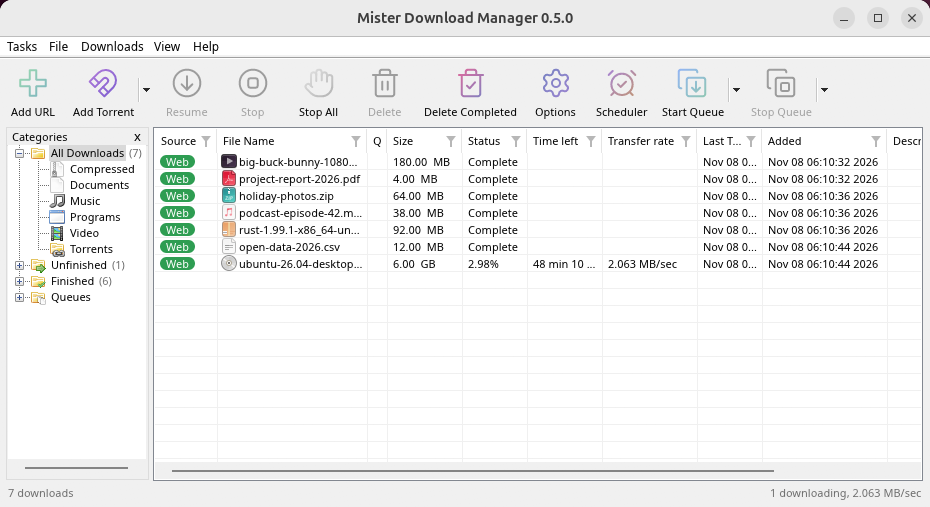
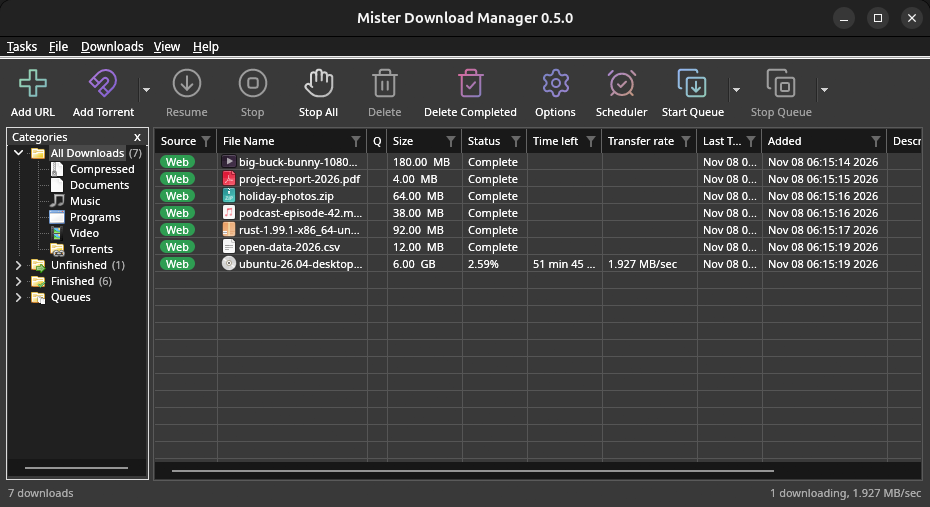
Browser integration is set up by VDM itself at each start (the browsers installed then are found); add the extension as in Browser integration. Firefox installed as a Snap (Ubuntu's) reaches VDM once you allow it; other Snap and Flatpak browsers can't (see Flatpak and Snap browsers). The tray icon, Dark Mode support and Launch on startup work on GNOME (Ubuntu's), KDE Plasma, Xfce and Cinnamon. Running downloads show their progress on VDM's icon in docks that can show it, such as Ubuntu Dock and KDE Plasma's task manager, as on the Windows taskbar (more).
In a Wayland session the windows go through XWayland or Wayland (below). Not there yet on Linux: screen readers (Orca) don't read VDM's windows; browsers installed as a Flatpak can't reach VDM (Firefox from Flathub may, through the desktop as the Snap does, but that isn't checked yet); and View → Draw with → Vulkan is a choice, OpenGL stays the default.
In a Wayland session, VDM chooses its windows' system as it starts, the same way however it was started (its menu entry, the browser's helper, the session's autostart). Its windows run through XWayland where X11 programs look right: only X11 lets VDM open its menus and drop-down lists right under what you clicked (on Wayland they open where the compositor puts new windows, often the middle of the screen) and hide its window in the notification area. That is GNOME and KDE Plasma, which tell X11 programs the screen's scale, and any desktop whose screens aren't scaled. On a scaled screen where nothing tells X11 programs the scale (Hyprland, labwc, sway and other wlroots compositors), the compositor would scale VDM's windows up, blurry, so VDM uses Wayland's own windows there. View → Window system picks X11 (XWayland) or Wayland instead, from the next start, for every way VDM starts (Automatic goes back to VDM's choice); VDM_WAYLAND=1 or VDM_WAYLAND=0 decides for one start. If the system lacks a library X11 windows need (such as libxkbcommon-x11, which the .deb and .rpm bring but the AppImage and the tar.gz can't), VDM opens on Wayland instead; with no window system it can use, it names what's missing and the command that installs it.
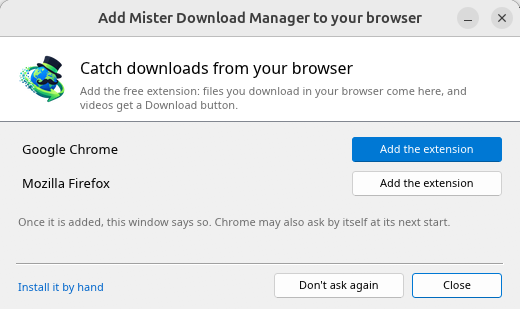
As janelas são as descritas nesta ajuda, com os tipos de letra, ícones de ficheiro e barras de título do ambiente de trabalho:
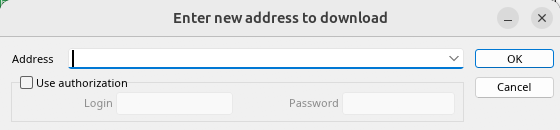
Adicionar URL. 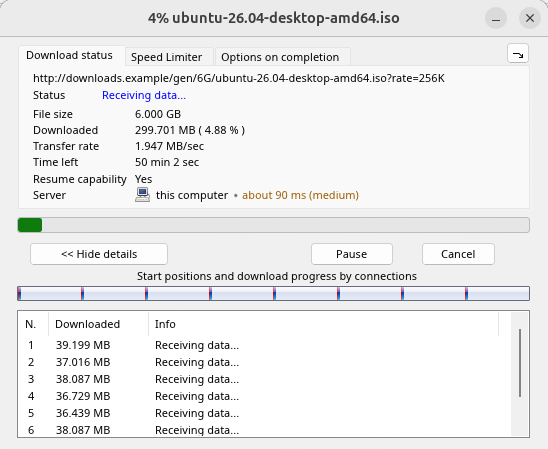
Progresso de uma transferência. 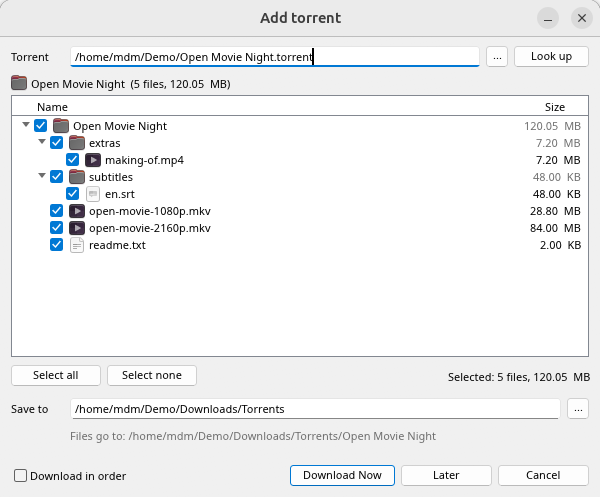
Adicionar torrent. 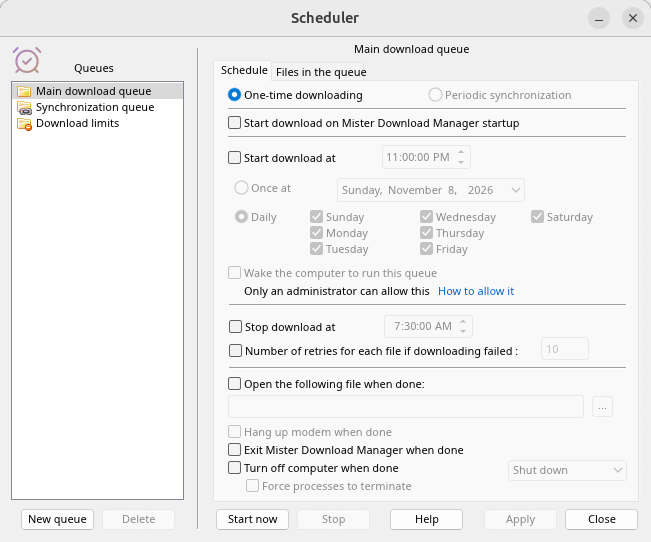
O Agendador. 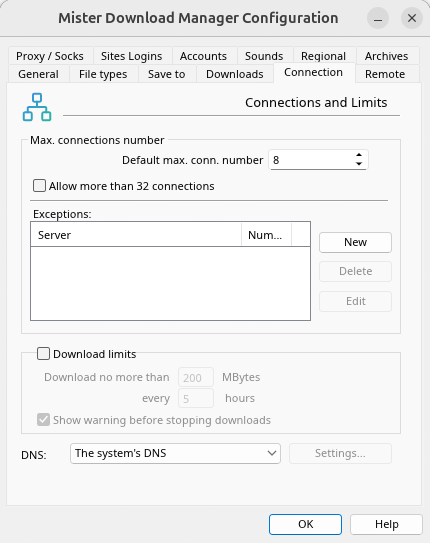
Opções.
E nos outros ambientes de trabalho em que foi verificado:
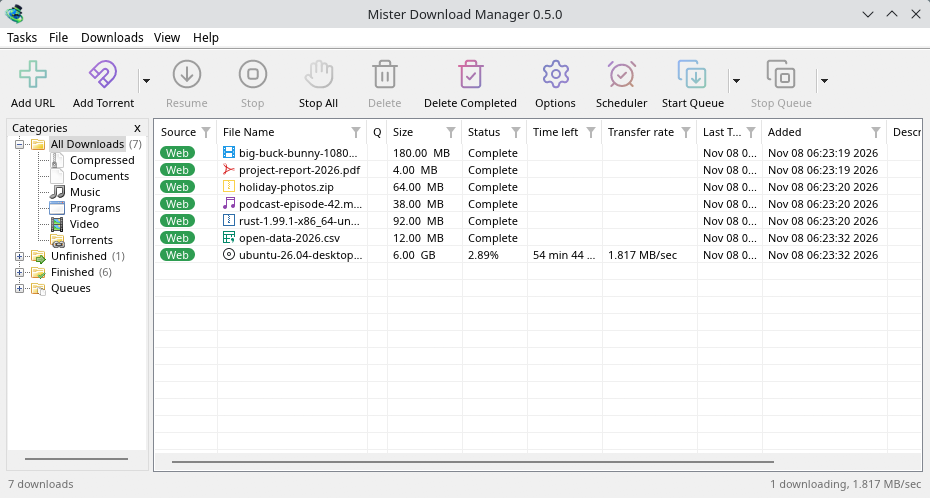
KDE Plasma. 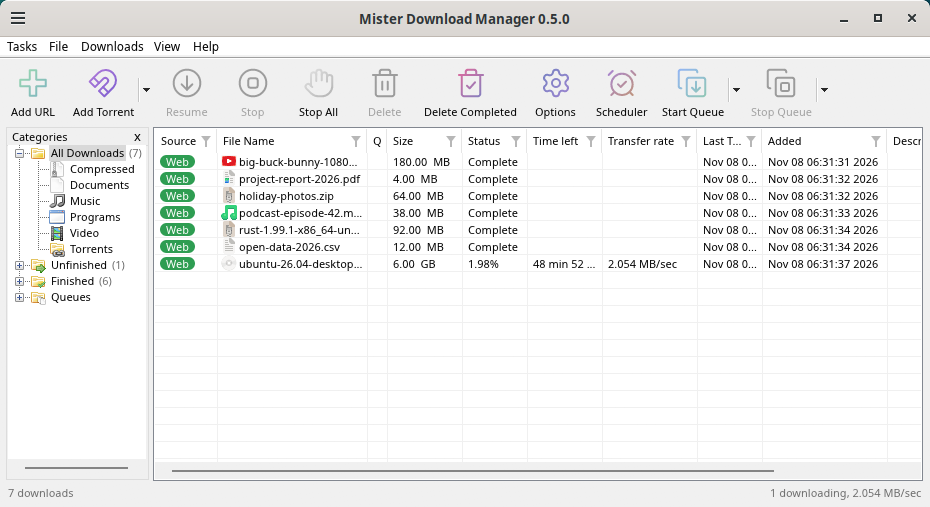
Cinnamon. 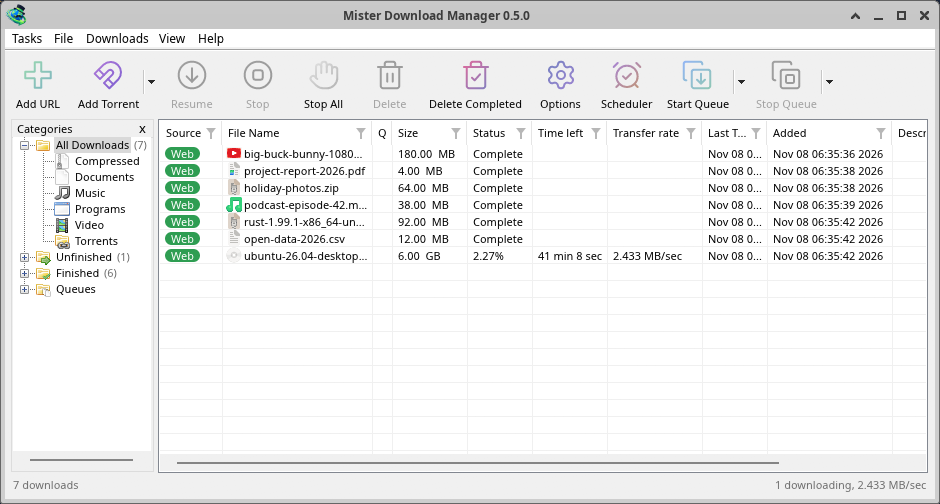
Xfce.
Desinstalar em Linux
sudo apt remove voltdownloadmanager (or sudo dnf remove voltdownloadmanager) removes the
programs, and the small files that tell your browsers where VDM's helper is: the .deb and .rpm
install those for everyone (in /etc and /usr/lib), for Chrome, Chromium, Edge, Brave, Vivaldi,
Helium and Firefox (the Snap too), so VDM doesn't write them in your home folder. For the AppImage
or the tar.gz, delete the file or the folder.
What VDM keeps in your home folder stays, as with any package: your list and settings
(~/.local/share/voltdownloadmanager), the AppImage's and the tar.gz's browser files, and
those of the browsers that read them only there (Opera, Helium, Thorium, and Firefox's forks:
Zen, LibreWolf, Floorp, Waterfox). A package can't remove those: it never touches
home folders. Without VDM they lead nowhere, so the extension says it can't reach VDM. To remove
them as well, run this as each user who used VDM, before uninstalling:
voltdownloadmanager-nmhost --unregister
(Do AppImage: ~/.local/share/voltdownloadmanager/browser-host/voltdownloadmanager-nmhost --unregister.) Já desinstalou? Isto remove os mesmos ficheiros:
find ~/.mozilla ~/.librewolf ~/.config -name com.voltdownloadmanager.host.json -delete 2>/dev/null
Num Mac
As versões para macOS são recentes e ainda experimentais: ainda não as experimentámos num Mac, por isso seria dos primeiros. Por favor, diga-nos como correu, bem ou mal.
| Ficheiro | O que é |
|---|---|
...-macos-arm64-experimental.dmg |
For a Mac with Apple Silicon (M1 or later: Apple menu → About This Mac shows a Chip). Open it and drag Volt Download Manager to Applications. macOS asks before its first start, because the app isn't notarized by Apple: right-click it and choose Open (on macOS 15 and later: System Settings → Privacy & Security → Open Anyway). |
...-macos-x86_64-experimental.dmg |
O mesmo, para um Mac com processador Intel (Acerca deste Mac mostra um Processador). |
Browser integration is set up by VDM itself at each start (the browsers installed then are found); add the extension as in Browser integration.
Instalar com a configuração
- Execute
VoltDownloadManager-<version>-setup.exe. - Choose the language. Windows' display language is already selected. The setup offers every language VDM has, and VDM starts in the one you pick.
- Escolha se pretende instalar apenas para si ou para todos no computador. A opção apenas para si não requer direitos de administrador e vai para
%LOCALAPPDATA%\Programs\Volt Download Manager. A opção para todos vai paraProgram Files. - Pick what the setup should do: - Set up browser integration (Chrome, Edge, Brave, Firefox) - Open .torrent files and magnet links with Volt Download Manager - Start Volt Download Manager when Windows starts - Create a desktop shortcut (off unless you tick it)
- Click Install, then Finish to start VDM.
If VDM is already running, the setup asks it to save and close first. To update, use Help → Check for updates → Update now, or run the setup of the new version (or update with WinGet); your list and settings stay.
A integração com o navegador precisa de mais um passo em cada navegador: adicionar a extensão. No Firefox, clique em Adicionar ao Firefox na sua página em addons.mozilla.org; no Chrome, Edge, Brave, Opera e Vivaldi, clique em Adicionar ao Chrome na sua página na Chrome Web Store. A integração com o navegador mostra como.
Desinstalar
Uninstall VDM from Windows Settings → Apps. The uninstaller asks whether to delete your download list and settings too. Your downloaded files are never touched.
Usar uma cópia zip
- Extraia o ficheiro para uma pasta onde tenha permissões de escrita (não diretamente em
Program Files). - Execute
voltdownloadmanager.exe.
Os ficheiros ZIP contêm os mesmos programas que o instalador: a aplicação, voltdownloadmanager-cli.exe (para transferir a partir da linha de comandos; consulte Linha de comandos e automação) e a pasta extension.
Primeiro arranque e idioma
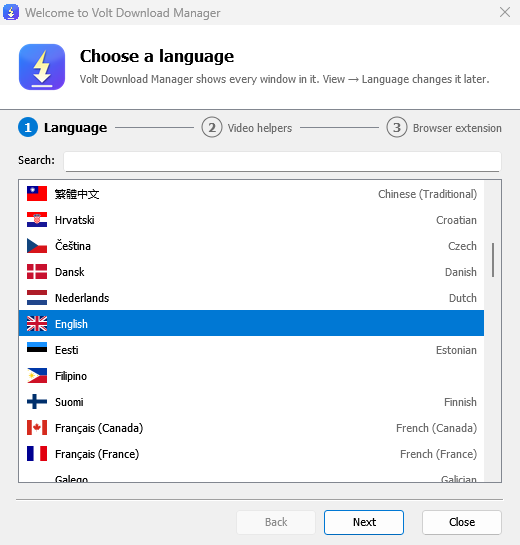
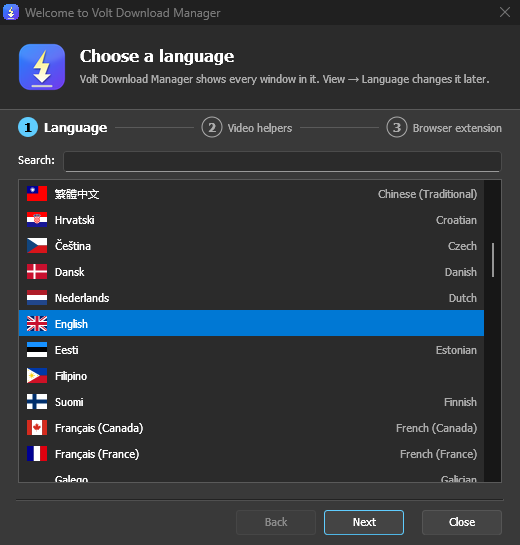
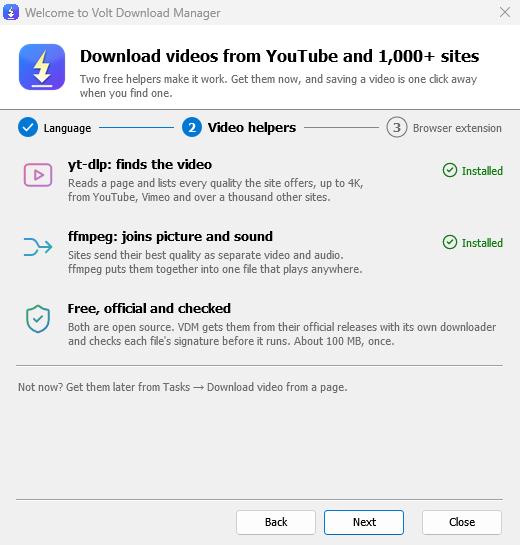
On its first start VDM opens one Welcome to Volt Download Manager window that walks you through what it needs, a step at a time: the steps are named on top, Back and Next move between them, and Finish on the last one closes it. Each step can be passed with Next without doing anything, Close or the window's × ends the setup at any step, and once it is finished or closed it doesn't come back: everything in it stays in the menus. Steps that aren't needed are left out.
- Language. - Installed with the setup: VDM starts in the language you chose in the setup, and this step is left out. - Otherwise: the list of languages, each with its flag and its own name. Click yours: the window switches to it at once, right to left for Arabic, Hebrew, Persian and Urdu.
Pode alterá-lo a qualquer momento em Ver → Idioma. Mais informações em Idiomas.
- Assistentes de vídeo (abaixo).
- Browser extension: each browser VDM found, with Add the extension for it, as in Browser integration. Left out when a browser's extension already reached VDM, or in a portable copy.
As ferramentas de vídeo
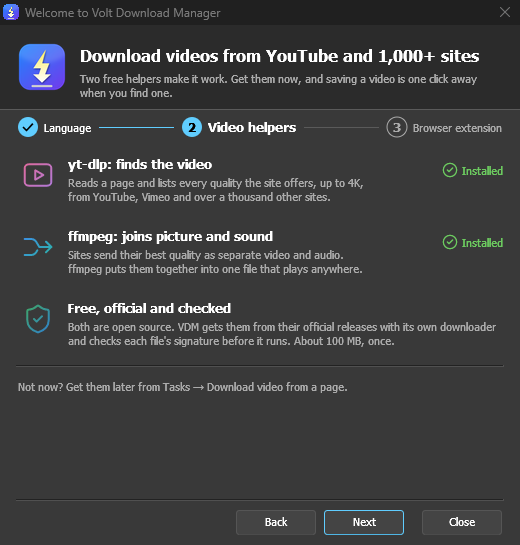
The setup's second step offers VDM's free video helpers: yt-dlp, which finds the video on a page, ffmpeg, which joins its picture and sound (on Windows; elsewhere VDM uses your system's), and Node.js, which YouTube needs, when your computer has no JavaScript runtime. Each says whether it is already there; one that isn't has its own Install button, and Yes, download them (recommended) gets every one that is missing. They download in the background, about 100 MB, once, each with its progress in its row, and go on if you close the window. Nothing is downloaded until you press one. Next leaves them for later: the video window offers them when you first need them. The step is left out when they are all there. More in Videos.
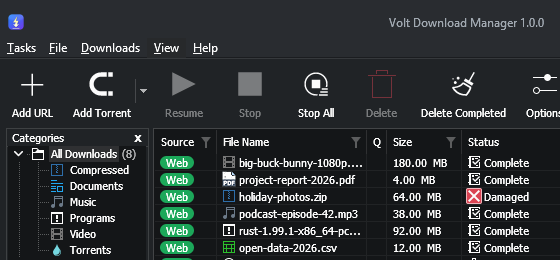
A janela principal
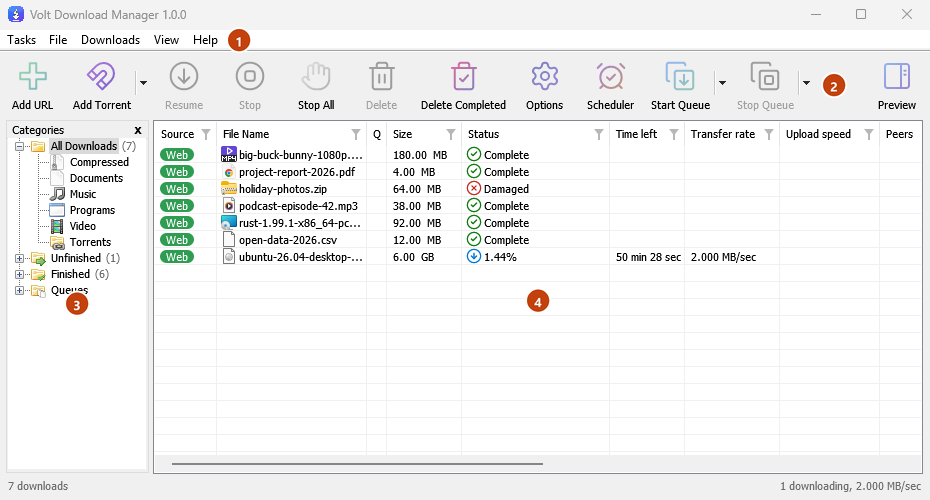
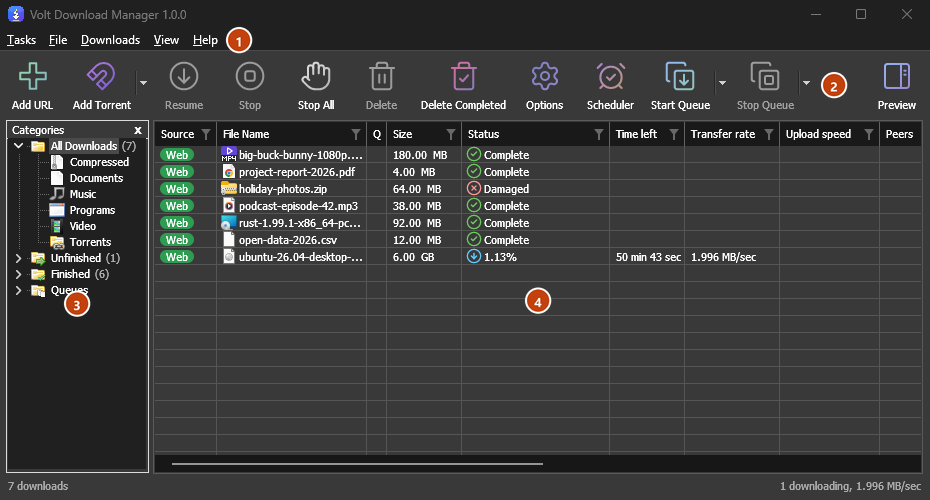
De cima para baixo:
- Barra de menus.
- Tarefas — adicionar transferências, torrents, ligações magnéticas, transferências em lote e vídeos de uma página; Definições de torrent; Link grabber; Feeds RSS; mostrar o destino de arrastar e largar; importar e exportar a lista; sair.
- Ficheiro — a transferência selecionada: Parar Download, Remover, Transferir Agora, Transferir novamente.
- Transferências — Pausar Tudo, Parar Tudo, Eliminar Todos os Concluídos, Procurar, o Agendador, filas, o Limitador de Velocidade e Opções.
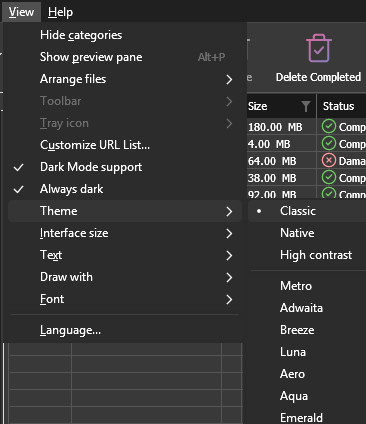
- Ver — mostrar ou ocultar as categorias, ordenar a lista (Organizar ficheiros), Suporte para Modo Escuro, Sempre escuro, Tema, Tamanho da interface (todas as janelas maiores, 100 % a 200 %; Ctrl +, Ctrl − e Ctrl 0 também), Fonte (o ficheiro de fonte e o tamanho do texto da própria interface, além de Tamanho da interface), Texto (Windows: letras suaves ou clássicas), Desenhar com (OpenGL, ou Direct3D no Windows, Vulkan no Linux, Metal no macOS) e Idioma.
- Help — help pages and tutorials (on the website, in your language when it has it), Keyboard shortcuts, Report a problem, Check for updates, About, Tell a friend and Support VDM (its creator's GitHub Sponsors page: optional, nothing in VDM changes).
- Barra de Ferramentas. Adicionar URL, Adicionar Torrent, Retomar, Parar, Parar Tudo, Eliminar, Eliminar Concluídas, Opções, Agendador, Iniciar Fila, Parar Fila. A pequena seta ao lado de Adicionar Torrent, Iniciar Fila e Parar Fila abre mais opções.
- Categorias (à esquerda). Escolha o que a lista apresenta: Todos os Downloads, Inacabado, Concluídos e Filas, cada um com as respetivas categorias. Arraste o espaço entre o painel e a lista para alargar o painel.
- Lista de transferências (à direita). Uma linha por transferência. Consulte A lista de transferências.
Modo escuro
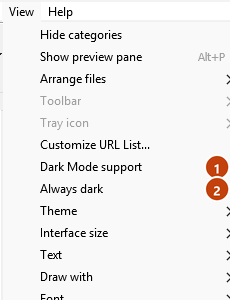
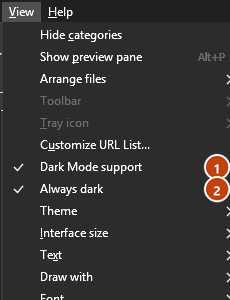
VDM follows your system: when Windows (or your desktop's light/dark preference on Linux and macOS) is set to dark mode, so is VDM. To keep VDM light whatever the system does, turn off View → Dark Mode support. To keep it dark whatever the system does, for example on a desktop that reports no preference, turn on View → Always dark.
Temas
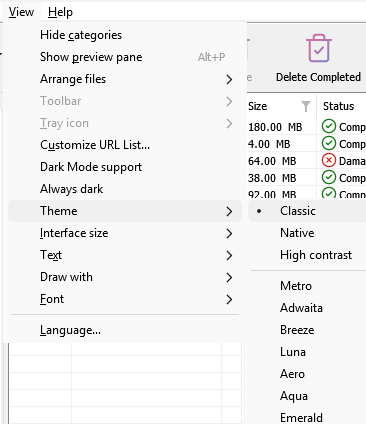
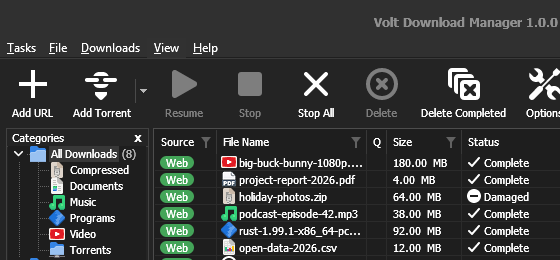
View → Theme changes VDM's look at once, keeping its layout:
- Classic: VDM's own look, the default.
- Nativo: as cores do sistema. A cor de destaque do Windows (Definições → Personalização → Cores) e, quando ativado, o tema de alto contraste; a cor de destaque do ambiente de trabalho e a opção de alto contraste no Linux (GNOME 47 e posteriores, KDE Plasma); a cor de destaque no macOS. O tema acompanha as alterações que fizer.
- Alto contraste: preto e branco, uma cor de destaque viva, todos os contornos desenhados e texto com um contraste de 7:1 ou superior.
- Metro: Windows 8's flat look: square corners, flat buttons and boxes, a coloured title bar with the title centred (on Windows, where VDM draws it), and one-colour icons (Microsoft's Fluent UI System Icons).
- Adwaita: GNOME's look: round corners, flat grey buttons, a rounded focus ring, GNOME's check boxes, a header bar with the title in bold and round buttons (on Windows, where VDM draws it), and GNOME's Adwaita icons, in colour for files and categories, one colour in the toolbar.
- Breeze: KDE Plasma's look: rounded corners, buttons and boxes that take the accent's edge under the pointer or when focused, KDE's check boxes and focus frame, KDE's title bar with the title centred and round buttons (on Windows, where VDM draws it), and KDE's Breeze icons.
- Luna: Windows XP's look: buttons shaded from white with an orange glow under the pointer, green ticks, square text boxes, progress in green blocks, a deep blue title bar with the title in bold (on Windows, where VDM draws it), and colourful icons drawn for VDM in that manner.
- Aero: Windows 7's look: glossy buttons that turn light blue under the pointer, quiet check boxes, a glossy green progress bar, a glassy title bar with the title on a soft glow (on Windows), and glossy icons drawn for VDM in that manner.
- Aqua: Mac OS X's look: gel buttons round at the ends (the default one blue), glossy check boxes, a blue focus ring, a blue gel progress bar, a grey title bar with small round buttons (on Windows), and icons drawn for VDM in that manner.
- Emerald: uma tela branca com uma tinta quase preta e uma escala de cinzentos neutros para a estrutura, preenchimentos esmeralda que contêm sempre texto quase preto em vez de branco, cantos de 6 pontos em cada controlo e ícones de uma só cor do Metro.
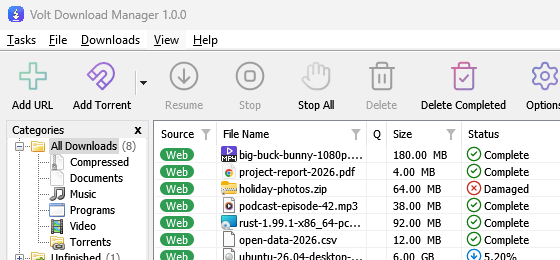
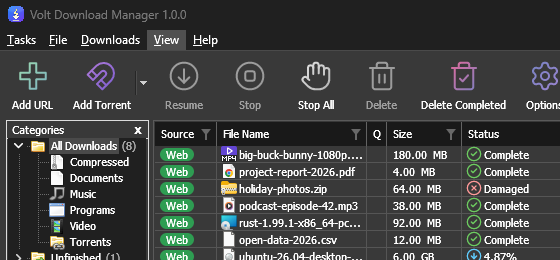
Clássico 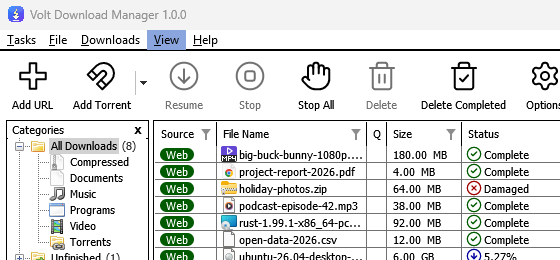
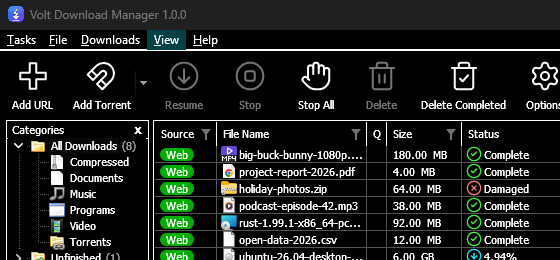
Alto contraste 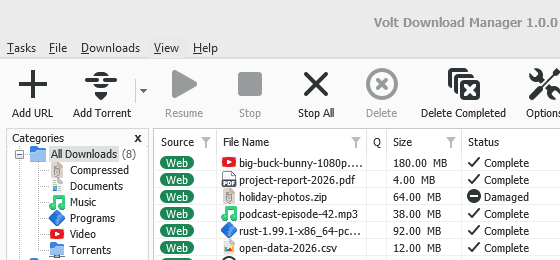
Adwaita 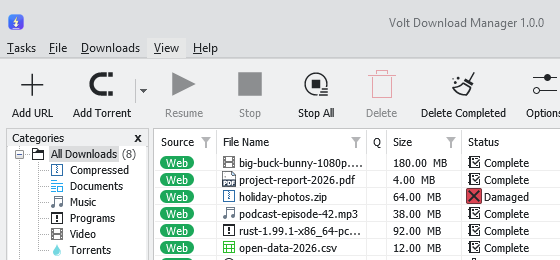
Breeze
Cada um tem um lado claro e um lado escuro: Suporte para Modo Escuro e Sempre escuro escolhem entre eles como antes. Os ficheiros de tema que colocar na pasta de temas (Ver → Tema → Abrir pasta de temas) também são listados lá, assim como os esquemas de cores Base16 e pywal (Ver → Tema → Adicionar um ficheiro de tema…; pywal segue wal enquanto é executado): Temas indica onde está essa pasta, o que um ficheiro de tema contém (inherits, cores, tamanhos, formas de controlo, ícones), como as cores de um esquema são usadas e como criar e partilhar um.
O ícone da bandeja
Closing the main window doesn't quit VDM. It hides in the notification area, and downloads, queues and schedules carry on. To make closing quit (a portable copy's folder can then be deleted), untick Options → General → Keep running when closing the window. If there is no icon for VDM at all — not in the notification area, nor behind the ^ hidden icons — the window minimizes to the taskbar instead, so downloads continue and there is a way back. An icon behind ^ can be clicked to bring the window back, and starting VDM again always does. On macOS the window closes into the Dock, as Mac apps' windows do: click VDM's icon in the Dock (or in the menu bar) to bring it back, and quit with Cmd+Q or Volt Download Manager → Quit.
On Linux this needs a tray, which most desktops have (KDE Plasma, Xfce, Cinnamon, Ubuntu's GNOME or GNOME with the AppIndicator extension, waybar's tray). On a desktop without one (some tiling window managers), closing the window quits VDM, since there would be nowhere to bring it back from.
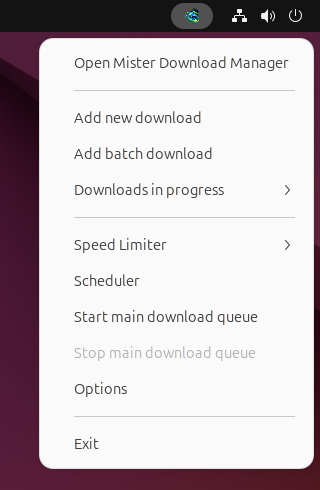
- Click the tray icon to see what is downloading: a small panel over the icon lists each running download with its progress bar, how much has come of how much, its speed and the time left, and the progress window's Pause (then Resume; Stop and save for a live stream being recorded) and Cancel beside it. Open Volt Download Manager at its bottom brings the window back. Its ×, Esc, a click elsewhere or another click on the icon closes it.
- Faça duplo clique no ícone da área de notificação para trazer a janela de volta imediatamente (Windows).
- Clique com o botão direito do rato para Adicionar novo download, Adicionar download em lote, Transferências em curso, Limitador de Velocidade, Agendador, a fila de downloads principal, Opções e Sair.
- Transferências em curso lista os downloads em execução. Escolha um para ver a sua janela de progresso.
- Options → General → Show downloads when the notification area icon is clicked is ticked in a new copy of VDM. Untick it and a click on the icon brings the window back (or hides it there while it is in front), as it did before the panel. An VDM that was set up before the panel keeps that click: tick it to have the panel.
- On Linux the panel depends on the desktop's tray. KDE Plasma and Xfce send VDM the click, so the panel opens beside the icon. GNOME's AppIndicator extension may open the icon's menu on a left click instead, or send no place for the click: the panel then opens at the top right of the screen, under GNOME's top bar. In a native Wayland session the compositor decides where the panel goes and may not give it the focus, so a click elsewhere doesn't close it there: use its × or click the icon again. If the panel doesn't suit your desktop, untick the option above.
Minimizar também oculta a janela principal lá, enquanto Minimizar para a área de notificação estiver ativada em Opções → Geral. Está ativada por predefinição; onde a área de notificação não tem ícone, Minimizar envia a janela para a barra de tarefas.
A janela de progresso de uma transferência também pode ir para lá, com o seu botão Minimizar ou com o seu botão Ocultar para a área de notificação: um pequeno traço com uma seta para baixo no canto.
No Windows, esse botão está na barra de título da janela, à esquerda de Minimizar, e no menu da barra de título (Alt+Espaço). No Linux e macOS, está no final da linha de separadores.
Para trazer a janela de volta, escolha-a em Transferências em curso, ou faça duplo clique na transferência na lista.
Para sair, escolha Tarefas → Sair ou Sair no menu da bandeja.
Where VDM keeps its data
A lista de transferências e as definições estão em %APPDATA%\voltdownloadmanager (downloads.json); no Linux em ~/.local/share/voltdownloadmanager, num Mac em ~/Library/Application Support/voltdownloadmanager. Uma cópia portátil mantém-nas na sua pasta data. Os ficheiros transferidos vão para a sua pasta Transferências, organizados numa pasta por categoria; pode alterar isso em Opções → Guardar em.
Próximos passos
Gratuito, de código aberto, sem anúncios, sem período de avaliação.
Download Volt Download Manager